Why this guide does not publish a generic price range
A boiler-only equipment price is not an installed price. Two homeowners can select the same model yet require different amounts of piping, electrical work, venting, removal, and commissioning. A number without those assumptions can make one proposal appear expensive when it actually includes work missing from another.
This guide explains what to ask for so you can build a realistic budget. It is not a current Straight Up price list or an estimate for your house. Request a written proposal after the installation has been evaluated. If a contractor provides a preliminary budget remotely, ask which assumptions could change after the site visit and how changes will be approved.
Start with the house and the heating system
The replacement should fit the home's heating requirements. Simply matching the old unit's input rating can repeat an earlier sizing mistake. Tell the estimator about insulation improvements, additions, rooms that never get comfortable, and changes to how the building is used. Those details help frame the assessment.
Discuss what type of heat distribution you have: hot-water baseboard, radiators, radiant floors, a hydro-air coil, or steam. These are not interchangeable systems. The Department of Energy's Building America replacement checklist emphasizes equipment selection and sizing, existing-system assessment, and installation quality. Ask how those issues are reflected in your proposal rather than treating the boiler model as the entire design.
Equipment choice changes more than the purchase price
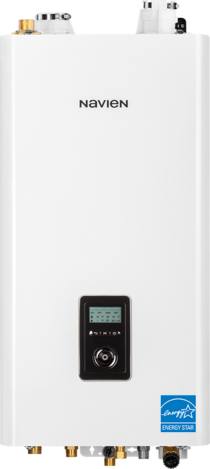
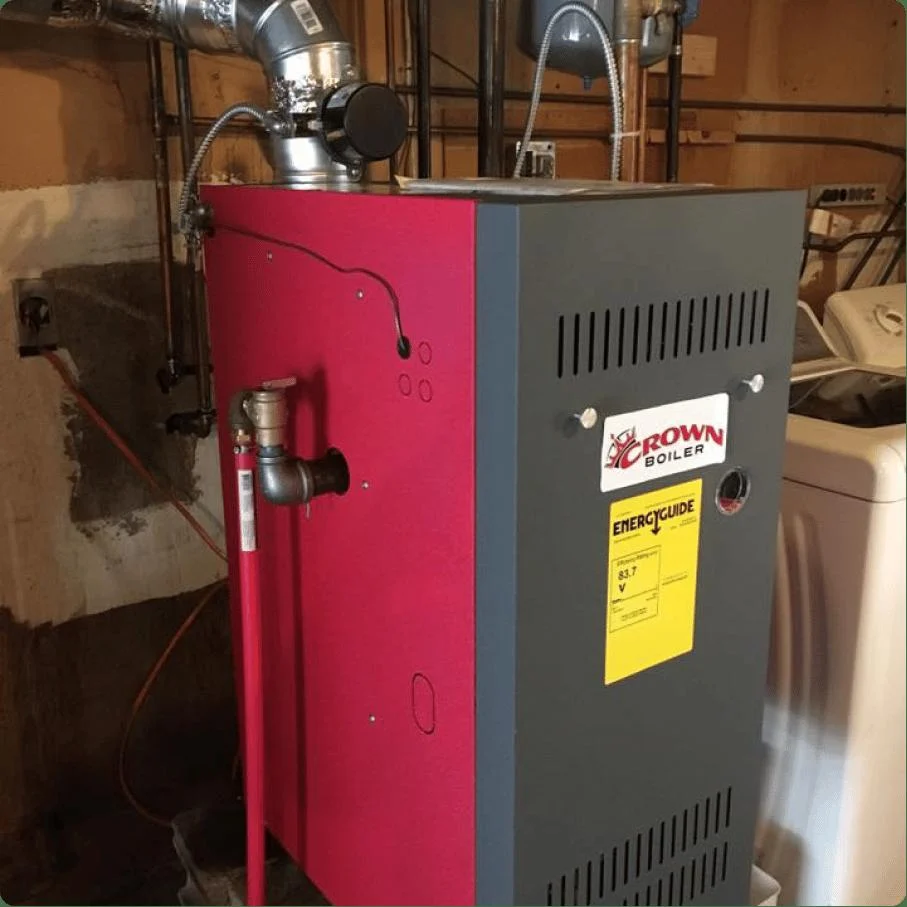
A conventional boiler and a wall-mounted condensing boiler can require different installation work. Fuel availability, venting routes, service access, controls, and condensate handling all influence suitability. A high efficiency rating is useful, but the proposed system must also work with the home's distribution temperatures and operating needs.
If considering a combi-boiler, explain how many bathrooms are used at once and whether the household has unusually large hot-water demands. A heating-only boiler with a separate water heater or indirect tank is another arrangement. Compare the complete system that supplies both space heat and domestic hot water, not just the wall-mounted appliance's price.
Existing conditions can change the labor scope
Ask whether the estimate includes removing and disposing of the old equipment, reconnecting or replacing near-boiler piping, and addressing existing valves, circulators, expansion components, and controls. Some installations can reuse sound components; others need changes for compatibility or condition. The proposal should identify what remains and what is replaced.
Access also matters. Narrow stairs, a finished basement, and difficult removal routes affect the work plan. Suspected hazardous insulation or other concealed conditions may require separate evaluation. Do not disturb unidentified old insulation to help the contractor. Ask how excluded work and unexpected findings will be documented before additional work proceeds.
Venting, fuel, permits, and startup belong in the comparison
A new appliance may need a different exhaust or combustion-air arrangement. Changing how one appliance vents can also affect another appliance using the same chimney. Ask the contractor to explain the proposed vent route and any related chimney work. Fuel conversions may add work beyond the boiler replacement itself.
Discuss applicable permits and inspections with the contractor and local authority; requirements depend on the project and jurisdiction. A complete scope should also explain startup, operating checks, homeowner instruction, and the documents you will receive. Equipment that is delivered and connected is not the same thing as a finished, commissioned installation.
Compare written proposals line by line
Create a simple comparison with equipment model, fuel, heating and hot-water arrangement, included components, removal, venting, electrical work, permits, startup, warranties, and exclusions. Mark anything unspecified as a question. Avoid assuming that phrases such as complete installation mean the same thing in every proposal.
Ask separately about the manufacturer's equipment warranty and the contractor's labor coverage. Clarify registration responsibilities, maintenance conditions, and what happens if a covered part fails. A longer parts warranty does not necessarily mean all labor or related expenses are covered. Also confirm the payment schedule and any financing terms in writing before deciding.
Consider operating cost without assuming a guaranteed payback
A replacement may improve comfort, reliability, and fuel use, but annual savings depend on the old equipment, fuel prices, weather, controls, and the home itself. Ask what assumptions support a savings estimate. A projected percentage is not the same as a promise about your next fuel bill.
Keep recent fuel usage records if available, and note other appliances using that fuel. Compare total cost over a realistic ownership period, including maintenance and any financing expense. Do not count a rebate or tax benefit in your budget until current eligibility and availability have been verified for your specific project. Programs and requirements can change.
Get a useful estimate for your local home
For a replacement assessment in Pine Bush or surrounding communities, gather model information, photos of the accessible installation, a description of comfort problems, and your hot-water needs. Our boiler installation page explains the service, while the Navien boiler guide covers wall-hung options. If the existing system has an identifiable fault, repair assessment can help inform the replacement decision.
The objective is a proposal that tells you what problem the new installation solves, what work is included, and what could still change. That is a stronger basis for comparing value than choosing the lowest unexplained number.
Frequently asked questions
Is a larger boiler better?
Not automatically. Capacity should fit the assessed load and system requirements. Ask how the proposed size was selected.
Can existing piping stay?
Sometimes. Condition and compatibility need review, and the estimate should specify which components will be reused.
Does a combi-boiler always cost less overall?
No. Compare the complete heating and hot-water installation, including changes required for your house and household demand.
Can you quote from a photograph?
Photos can help start the conversation, but they may not reveal system condition, sizing information, venting constraints, or all required work. Clarify whether a remote number is preliminary.
Sources & further reading
General homeowner information. Follow the instructions for your specific equipment; a symptom alone is not a diagnosis.