Water around the heater: find the source, not just the puddle
Moisture can originate from a connection, a drain valve, a relief-valve discharge, nearby piping, or the tank itself. Water can travel down an outer jacket, so the place it lands is not necessarily the place it started. Condensing equipment also has a condensate system that must be distinguished from a potable-water leak.
Report active leakage promptly. Keep away from standing water near electrical equipment. If you know the correct isolation controls and can reach them safely, follow the equipment's shutdown instructions; otherwise ask for urgent professional guidance. Do not continue using leaking equipment while hoping the puddle will disappear. A technician should identify the origin before recommending a tank replacement.
Less hot water or a slower recovery
A shorter shower can result from changed demand, a heating fault, a mixing problem, or another condition. Track whether the same household routine now produces less hot water. Several guests taking consecutive showers is a different situation from suddenly losing capacity with no change in use.
Compare more than one fixture. If the problem occurs only at one shower, that fixture's valve may be responsible. If all fixtures are affected, the heater or a shared component deserves attention. See our guide to hot water that runs out too quickly for questions that help separate demand from a developing equipment fault. Do not turn the temperature up as a substitute for diagnosis.
Discolored water needs a broader look
Rust-colored hot water can prompt an inspection of the heater and piping, but color alone does not prove the storage tank is corroded through. Compare hot and cold water and tell the technician whether the change appears throughout the house. If cold water is also discolored, the supply or distribution system may be involved.
Private-well homes should treat a new color change as a reason to investigate water quality, not just to shop for a heater. An equipment inspection and water testing answer different questions. Neither clear water nor a clean-looking heater proves drinking-water safety. Avoid doing laundry in visibly discolored water until the source and appropriate next steps are understood.
Noises and recurring shutdowns
A new rumble, pop, or other sound is useful information, but it is not a diagnosis by itself. Describe when it happens: during heating, after a fixture closes, or continuously. Some noises involve water movement or connected piping rather than the heater tank. If you can record the sound safely from a normal standing position, the recording may help explain an intermittent symptom.
Repeated error messages or safety trips also need investigation. Photograph the display before changing anything. Do not bypass a safety control or repeatedly reset equipment to get through another day. If there is a gas smell, smoke, or a carbon monoxide alarm, leave and call emergency services or the gas utility from outside instead of investigating.
Age and maintenance records help put the findings in context
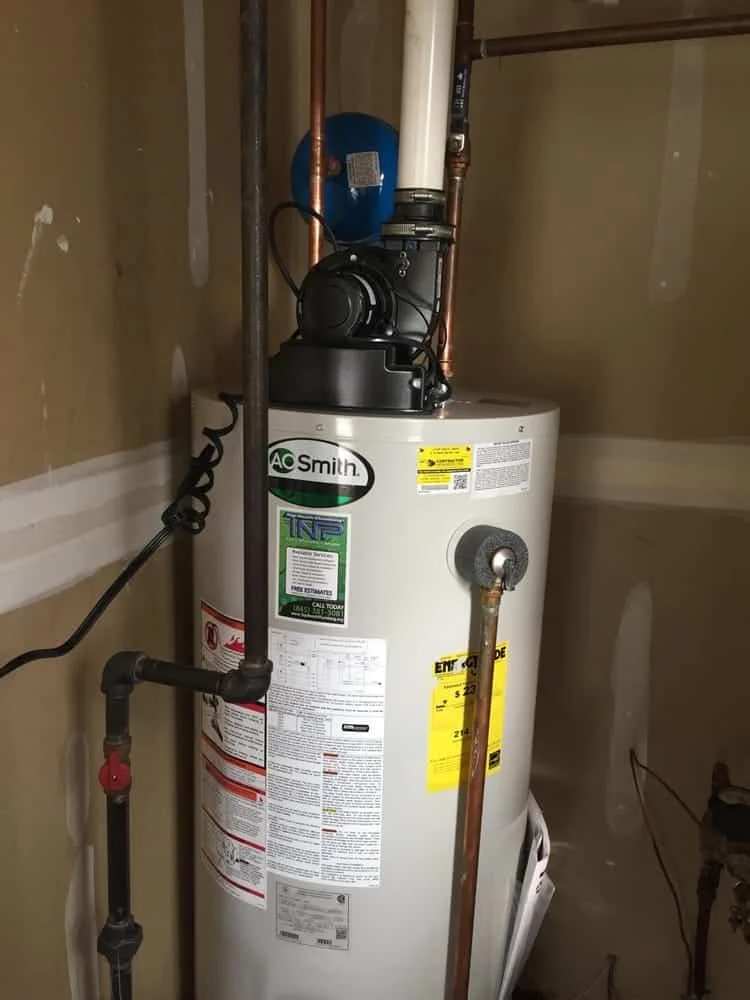
Locate the model and serial information without removing covers. If you do not know the installation date, ask the manufacturer or service company to help interpret the serial number. Different brands use different date formats; an online rule for another brand can be misleading.
Keep prior invoices, warranty information, and maintenance notes together. They can show whether the same fault is recurring or whether a new issue has appeared. There is no single age at which every heater becomes unsafe or must be replaced. Equipment type, installation, water conditions, and maintenance history vary. Age is one part of a repair decision, not a substitute for an inspection.
Questions to ask about repair and replacement
Ask what failed, whether the storage tank itself is leaking, and what a repair would address. Request the installed repair cost and the applicable part and labor warranty. A relatively limited component repair on otherwise sound equipment differs from a compromised tank or a pattern of costly faults.
If replacement makes sense, compare equivalent scopes. The proposal should identify equipment, capacity, removal of the old unit, required connection work, and startup checks. Discuss household demand and available installation space. Fuel conversion, electrical upgrades, or venting changes can affect the work. Avoid choosing solely by the sticker price of the heater.
For Pine Bush and surrounding communities, start with water heater repair assessment or review our installation service. An inspection can establish whether a planned replacement is sensible before a breakdown forces a rushed decision.
Reduce surprises without expecting a guarantee
Keep the area accessible and occasionally look for new moisture, staining, or changes in the display. Follow the manufacturer's maintenance schedule and ask which work should be performed professionally. An anode inspection or flushing recommendation depends on equipment design and condition; it should not be copied from a generic checklist without checking the manual.
A suitable leak alarm can provide earlier notice of water on the floor, but it does not prevent every leak or replace proper drainage arrangements. Ask about options appropriate to the installation. Maintenance and monitoring reduce uncertainty; neither can promise a particular remaining service life.
Frequently asked questions
Does a leaking relief valve mean the tank has failed?
No. Discharge can involve pressure, temperature, or a valve problem. The cause needs diagnosis. Never plug the outlet or discharge pipe to stop the water.
Can a tank leak be patched?
A confirmed leak from the storage vessel generally calls for replacement rather than an improvised patch. Have the leak source confirmed first; a leaking connection is a different problem.
Should I replace a heater just because it is old?
Age may justify planning, particularly where a leak would cause substantial damage. Condition, performance, repair history, warranty, and replacement options should guide the final decision.
Is an unusual sound always sediment?
No. Sound can have several sources. Describe its timing and arrange an inspection rather than assuming that flushing will solve it.
Sources & further reading
General homeowner information. Follow the instructions for your specific equipment; a symptom alone is not a diagnosis.