Understanding a running toilet
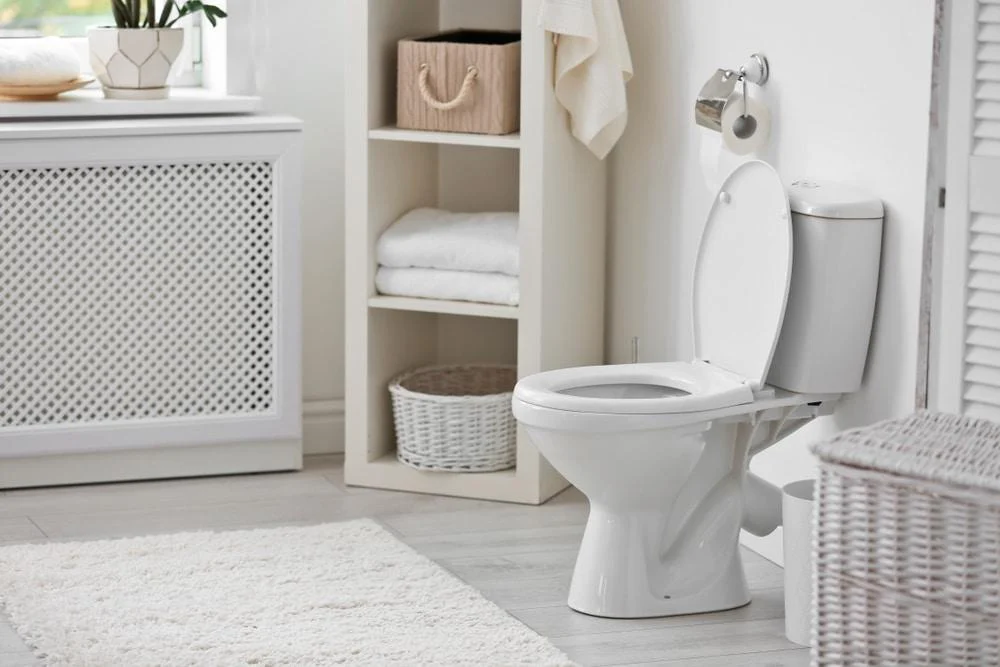
A toilet that hisses for a few moments after flushing is usually refilling its tank. But if it keeps running long after the flush—or seems quiet, then refills by itself every few minutes—water may be escaping where it should not. The good news is that you can often narrow down the problem without removing the toilet or taking apart its plumbing.
Start with one question: Where is the water going? Water continuously entering the overflow tube points toward a filling or water-level problem. Water slowly leaking from the tank into the bowl points more often toward a sealing problem. Water on the floor is a different issue and needs prompt attention.
First, determine what kind of "running" you hear
After a normal flush, the tank refills and the sound stops. If it does not, there are three common patterns:
- Continuous hiss or trickle: You can hear the tank filling even though no one has flushed recently. The fill valve may not be closing, or the tank water level may be spilling into the overflow tube.
- Quiet for a while, then a brief refill: Often called ghost flushing, this can happen when water slowly leaks from the tank into the bowl and the fill valve replaces it. A worn flush-valve seal or flapper is one possibility.
- Running only when the handle sticks: The handle, chain, or flush mechanism may be keeping the flapper from returning fully to its seat. Some toilets use a canister or dual-flush mechanism rather than a traditional flapper.
These are clues, not guaranteed diagnoses. Different toilet designs use different repair parts.
A quick check you can make without tools
Carefully lift the tank lid and set it on a stable, padded surface; porcelain tank lids are heavy and can break. With the toilet undisturbed, look at the water level and the open top of the vertical overflow tube inside the tank.
If water is continually pouring into the overflow tube, the tank is filling higher than it should. The float setting or fill-valve mechanism may be the issue. Follow your toilet manufacturer's instructions for checking the correct tank water level. Don't bend unfamiliar parts or force an adjustment.
If the tank water is below the overflow tube but the toilet periodically refills, water may be slipping past the flapper or flush-valve seal into the bowl. A simple dye test can help confirm this.
If water is pooling around the tank, supply line, or base, stop treating it as an internal running-water problem. If the toilet's nearby shutoff valve turns freely, gently close it and arrange plumbing help. Do not force a stuck valve, and avoid using a toilet with a suspected crack or active exterior leak.
How to do the 10-minute toilet dye test
The U.S. Environmental Protection Agency's WaterSense program recommends this basic test for silent toilet leaks:
- Let the toilet finish any normal refill. Do not flush during the test.
- Add a few drops of food coloring or a toilet leak-detection dye tablet to the tank, not the bowl.
- Wait about 10 minutes without flushing.
- Look into the bowl. If the coloring has appeared there, water is escaping from the tank into the bowl.
- Flush promptly afterward to help prevent staining.
A positive test usually means a flush-valve seal needs attention; a conventional rubber flapper is a common cause. A negative test does not rule out every intermittent problem. If you still hear water running, note whether the tank level is reaching the overflow tube.
What homeowners can safely inspect
For a conventional flapper toilet, look for a visibly tangled chain or a handle that does not return after flushing. The chain should allow the flapper to settle fully; it should not hold it up. If the rubber flapper looks warped, brittle, or no longer seals, replacement may be reasonable for someone comfortable following the correct manufacturer's instructions. Turn off the supply first and confirm the replacement part fits that toilet's model.
Do not assume that every running toilet needs a new flapper. If water is flowing over the overflow tube, replacing the flapper alone will not address the likely filling problem. Conversely, lowering the tank water level will not repair a deteriorated flush-valve seal.
For dual-flush, pressure-assisted, and specialty toilets, consult the model instructions. Their mechanisms differ from the familiar lift-chain-and-flapper design. If you cannot positively identify a part, avoid trial-and-error adjustments.
When it's worth calling a plumber
Arrange an assessment if the fill valve keeps running, a replaced seal has not solved the problem, the shutoff does not operate reliably, the tank or bowl has a crack, the toilet rocks, or you see water on the floor. Multiple toilets acting strangely can also justify looking beyond a single fixture.
When calling, it helps to say whether the toilet runs continuously or refills intermittently, whether a dye test turned positive, and whether water is going into the overflow tube. Those observations can save time during diagnosis.
A running toilet and a clogged toilet are not the same problem. If the bowl is rising, not draining, or wastewater is appearing in other fixtures, stop flushing and see our drain-cleaning service information. Repeated flushing can make a backup worse.
Repair the toilet—or replace it?
A single worn flapper or fill valve does not automatically justify replacing an entire toilet. But a cracked fixture, persistent problems across multiple components, poor fixture stability, or a bathroom renovation may change the decision. If replacement makes sense, compare fit, rough-in dimensions, and water efficiency before purchasing. The EPA recommends choosing a WaterSense-labeled model when buying a new toilet.
Our toilet installation service page explains what to consider about dimensions, flange conditions, shutoff valves, and connections. If the problem is still unclear, our broader plumbing services page is another starting point.
A simple way to describe the problem when you call
Instead of just saying, "My toilet is broken," try: "It refills every fifteen minutes even when no one flushes. The tank water is below the overflow, and the dye showed up in the bowl." Or: "The fill valve keeps hissing, and I can see water entering the overflow tube."
That description points to a likely area to inspect without pretending the cause is certain. It also helps distinguish a planned fixture repair from an urgent leak at the floor.
Straight Up Plumbing & Heating Inc. is based in Pine Bush, New York, and serves homeowners throughout Orange, Ulster, and Sullivan Counties, subject to address and scheduling availability. To discuss a toilet problem, call (845) 744-6716 or contact our team. You can also learn about Straight Up.
Where service meets integrity.
Running toilet FAQs
Why does my toilet refill when nobody has flushed?
Water may be leaking slowly from the tank into the bowl. The fill valve replaces the lost water. A dye test can help identify that internal leak.
Will replacing the flapper fix every running toilet?
No. Water spilling into the overflow tube points toward a filling or water-level problem. Match any replacement part to the toilet model.
What if the shutoff valve will not turn?
Do not force it. Contact a plumber, particularly if water is leaking onto the floor. Avoid using a cracked or externally leaking toilet.
Sources & further reading
General homeowner information. Follow the instructions for your specific equipment; a symptom alone is not a diagnosis.